BRIEF IN. MP4 OUT.

A finished ad in ten minutes.

Describe what you're selling. Get back a scripted, scored, captioned video — with a presenter on camera saying your words.

60 credits free. No card. Build a whole ad and watch it back before you decide.

THE MATH

Most ad tools hand you a piece. You still have to make the ad.

A generator gives you a picture. An editor gives you a timeline and expects footage. Somewhere between the two sits a week of your life and an invoice.

$4,200
Median cost of a single produced 30-second spot from a small agency.
3–6 wks
Typical turnaround from brief to delivered file. Two of those weeks are revisions.
1
How many formats you usually get, when the platforms want three.
HOW IT WORKS

Three steps. The rest is already done.

STEP 01

Write one sentence about what you're selling.

Ask for three angles and you get three genuinely different openings — proof first, the problem, a straight offer — not one idea with the adjectives swapped.

Pick the one that survives being read aloud.

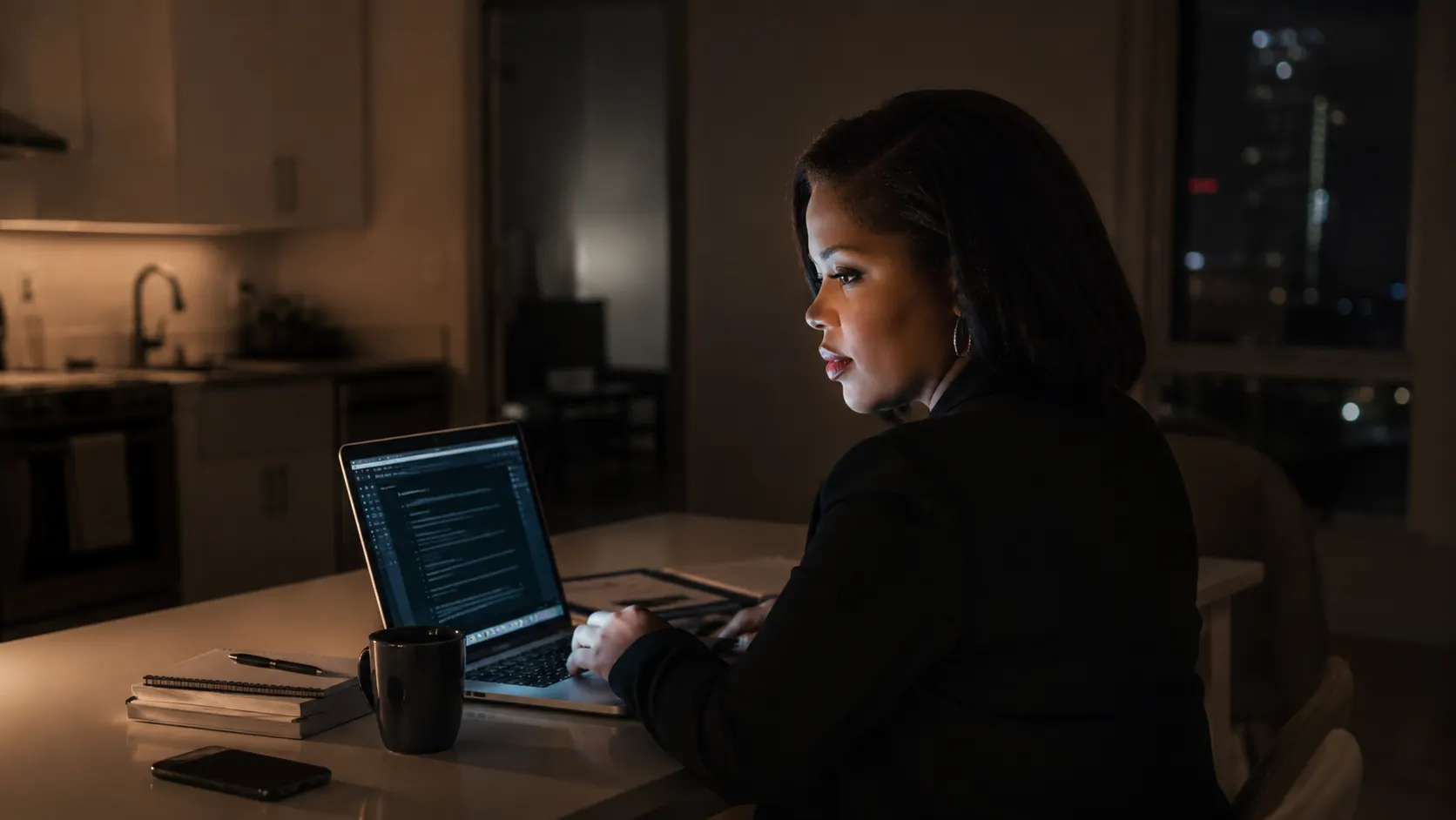
Hands typing a brief into a laptop at night
STEP 02

It builds the storyboard, then fills it in.

Every scene gets its own art direction, its own line of narration, and a picture generated to match. Lock a face and the same person appears in every shot.

A jingle is written to sit underneath, and the cuts move onto its beat.

An eight-scene storyboard laid out on a desk
STEP 03

Put a person on camera saying it.

Upload one photograph. That face is animated speaking your script — an exact likeness, because nothing redraws them.

Then it renders. Captions burned in, thirty seconds meaning thirty seconds, in every format you need.

A presenter speaking directly to camera
WHAT MAKES IT LOOK MADE, NOT GENERATED

The details that separate an ad from a slideshow.

Presenter on camera

A presenter, not a stock face

One photograph becomes a person speaking your script. Lock that face and they stay recognisable across every scene — or animate the photo directly and the likeness is exact.

An audio waveform rendered in amber light

Cuts that land on the beat

The tempo is measured, not guessed, and every scene boundary snaps to the grid. Cuts landing on the beat rather than near it is most of what makes a spot feel deliberate.

The same ad shown at three aspect ratios

Every format, typeset properly

9:16, 4:5, 1:1 and 16:9 from one timeline — with the type repositioned for each, not letterboxed into a strip. And exact durations, because platforms reject 31.4 seconds.

PRICING

Build for free. Pay when you want the file.

Every plan includes the whole studio — script, images, voice, music, presenter, captions and render. What changes is how much you make and whether you walk out with it.

FREE
$0
60 credits, once
  • The entire studio
  • Build and watch it back
  • Watermarked preview
  • No export
Start free
STARTER
$29 /mo
500 credits a month
  • Export clean MP4
  • No watermark
  • Client review links
  • Roughly 5–10 spots
Choose Starter
STUDIO
$79 /mo
1,600 credits a month
  • Everything in Starter
  • Every format from one timeline
  • Roughly 20 spots
Choose Studio
AGENCY
$199 /mo
4,500 credits a month
  • Everything in Studio
  • Client volume
  • Roughly 50 spots
Choose Agency

Credit pack — 500 credits

A top-up when a month runs short. No subscription, never expires, stacks on any plan.

$35
Buy a pack

A 60-second ad with a presenter costs about 85 credits. A simple 30-second spot is nearer 45.

QUESTIONS

The things people ask first.

What do I actually get at the end?

An H.264 MP4 with the narration, music bed and burned-in captions already mixed — the file you upload straight to a platform. Not a project you still have to finish somewhere else. You can also download the caption file separately if a platform wants it, and the exact FFmpeg command if you'd rather re-encode yourself.

Do I need footage, a camera, or actors?

No. The pictures are generated from the brief, the voice is generated from the script, the music is written to order. For a presenter you need one photograph of a face — a clear headshot is enough.

Whose face can I use for the presenter?

One you have the right to use: your own, an employee who's agreed, or licensed stock talent. Don't upload someone who hasn't consented. The tool won't stop you, and that's exactly why it's on you.

What is a credit, and why not just count videos?

Because ads aren't the same size. Credits meter the steps that cost real money — writing, images, narration, music, the presenter, the render. A short spot with three scenes costs a fraction of a 60-second one with a presenter, and you shouldn't pay the same for both. Failed work is refunded automatically.

Why can't I export on the free plan?

Because the free tier is generous where it counts — you get the whole studio and sixty credits, enough to build a real ad and watch it back. Once you've seen it work, the file is what you're paying for. It seemed more honest than a locked door on the way in or a fourteen-day clock.

Can I cancel?

Any time, from your account. Credits you've already bought or been granted stay yours until spent — a cancellation doesn't confiscate them.

Does it get better the more I use it?

Yes, and specifically: when a client approves a cut, the copy that earned it is promoted in your brand memory. When they ask for a change, their words are kept verbatim. The tenth ad is written knowing what the first nine learned.

Who built this?

MelonSeed Technology Inc., a ClipOpera Tech product. If something's broken or you want to talk to a person, call 800-515-7730.

Make one. See if it's any good.

Sixty credits, no card, no clock. Build a whole ad and watch it back before you decide anything.